
What Is Propolis? Nature's Protective Bee Resin

Honey bees produce more than just honey. One of the hive's most fascinating creations is propolis, a remarkable resinous substance that bees use to help protect and maintain the health of their colony.
Often called "bee glue," propolis has been valued for centuries and continues to be studied for its unique composition and traditional uses. While many people are familiar with honey and beeswax, propolis remains one of the lesser-known treasures of the hive.
What Is Propolis?
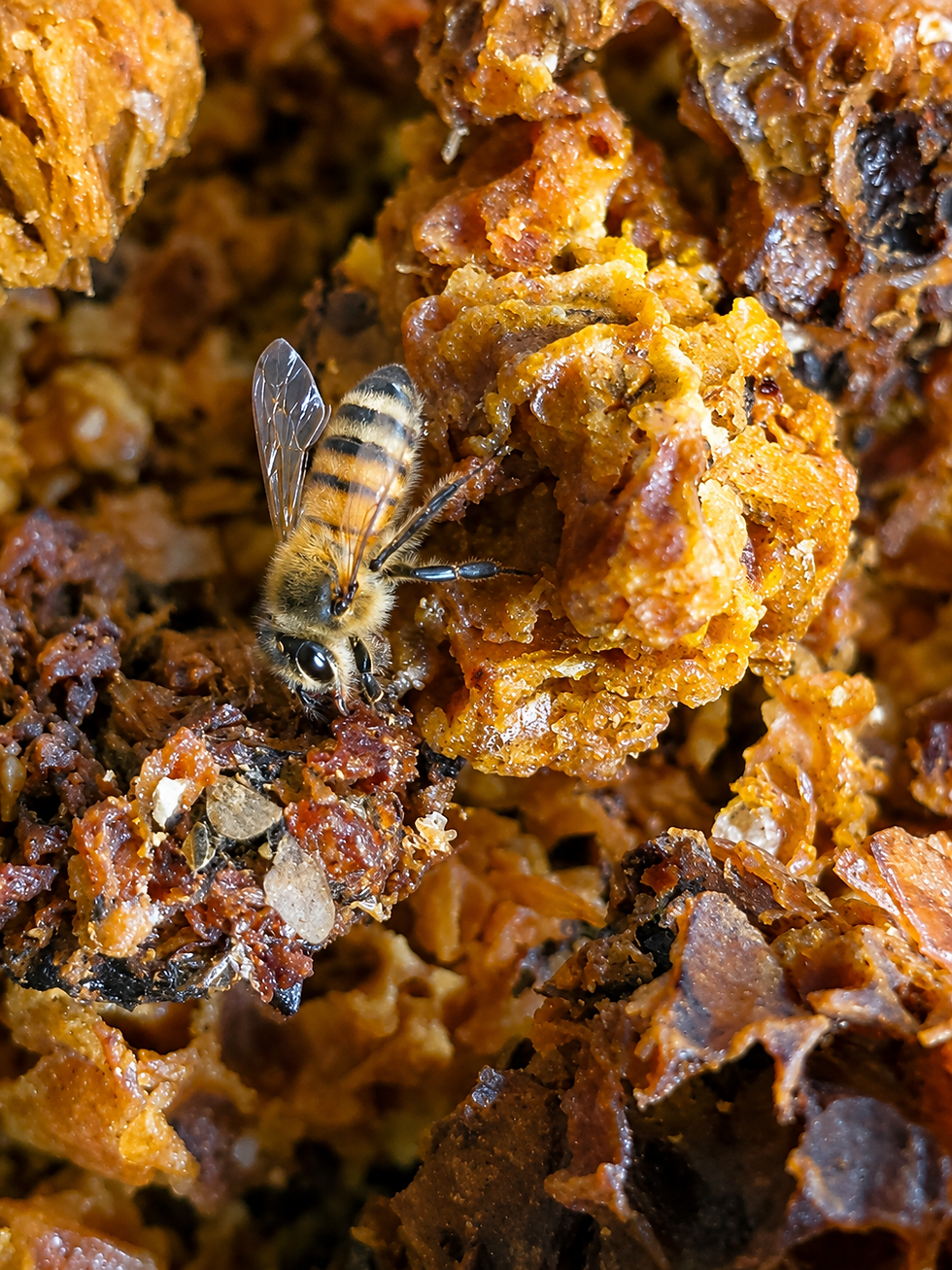
Propolis is a sticky, resin-like material that honey bees create by collecting sap and resins from tree buds, bark, and other botanical sources. After gathering these plant resins, bees mix them with beeswax and naturally occurring enzymes to produce propolis.
The finished material becomes an essential building product within the hive.
Its color can range from golden brown to dark reddish-brown or nearly black, depending on the local plants and trees available to the bees.
Why Do Honey Bees Make Propolis?
Honey bees use propolis for many important purposes inside the hive.
They use it to:
Seal small cracks and openings.
Strengthen parts of the hive.
Smooth rough interior surfaces.
Help protect the colony from outside contaminants.
Reduce unwanted drafts and moisture.
In many ways, propolis helps create a cleaner, more stable environment for the colony.
Where Does Propolis Come From?
The exact composition of propolis varies depending on where the bees forage.
Because bees collect resins from different trees and plants throughout the seasons, propolis produced in one region may differ from propolis collected elsewhere.
This natural variation is one of the reasons no two batches of propolis are exactly alike.
Traditional Uses of Propolis
For centuries, propolis has been used in traditional wellness practices across many cultures.
Today, it can commonly be found in products such as:
Tinctures
Salves
Lozenges
Sprays
Toothpastes
Skincare products
Researchers continue to study propolis and its naturally occurring compounds, although much remains to be learned.
What Does Propolis Smell Like?
Fresh propolis has a rich, earthy aroma with hints of tree resin, honey, beeswax, and forest botanicals.
Many people describe its scent as warm, slightly sweet, and pleasantly woodsy.
Is Propolis the Same as Beeswax?
No.
Although both are produced by honey bees, they serve different purposes.
Beeswax is secreted by worker bees to build the honeycomb.
Propolis is created from plant resins collected by foraging bees and is primarily used to seal and protect the hive.
Our Approach to Propolis
At Hi Vibe Honey Bees & Apothecary, our propolis comes from our own carefully managed colonies.
Because every hive and season is unique, each batch naturally reflects the plants, trees, and landscape surrounding our apiaries.
We carefully process our propolis in small batches while preserving the qualities that make this remarkable hive product so unique.
A Remarkable Gift from the Hive
Propolis is one of the many ways honey bees demonstrate their incredible ability to work with the natural world.
From collecting plant resins to protecting their colony, honey bees transform simple ingredients from nature into one of the hive's most fascinating creations.
Whether you're simply curious about honey bees or interested in learning more about traditional bee products, propolis offers another glimpse into the remarkable complexity of life inside the hive.
Continue Learning
Interested in learning more about honey bees and the amazing products they create? Explore these related articles:


Comments