
How Honey Bees Produce Propolis, Beeswax, and Royal Jelly

When most people think about honey bees, they think of honey. While honey is certainly one of the hive's most well-known products, it's only part of the story. Honey bees also produce propolis, beeswax, and royal jelly—each serving a unique purpose within the colony.
These remarkable substances aren't created for people. They are produced to help the colony survive, grow, and thrive. Understanding why bees make them gives us a greater appreciation for the incredible complexity of life inside a hive.
Propolis: The Hive's Natural Sealant
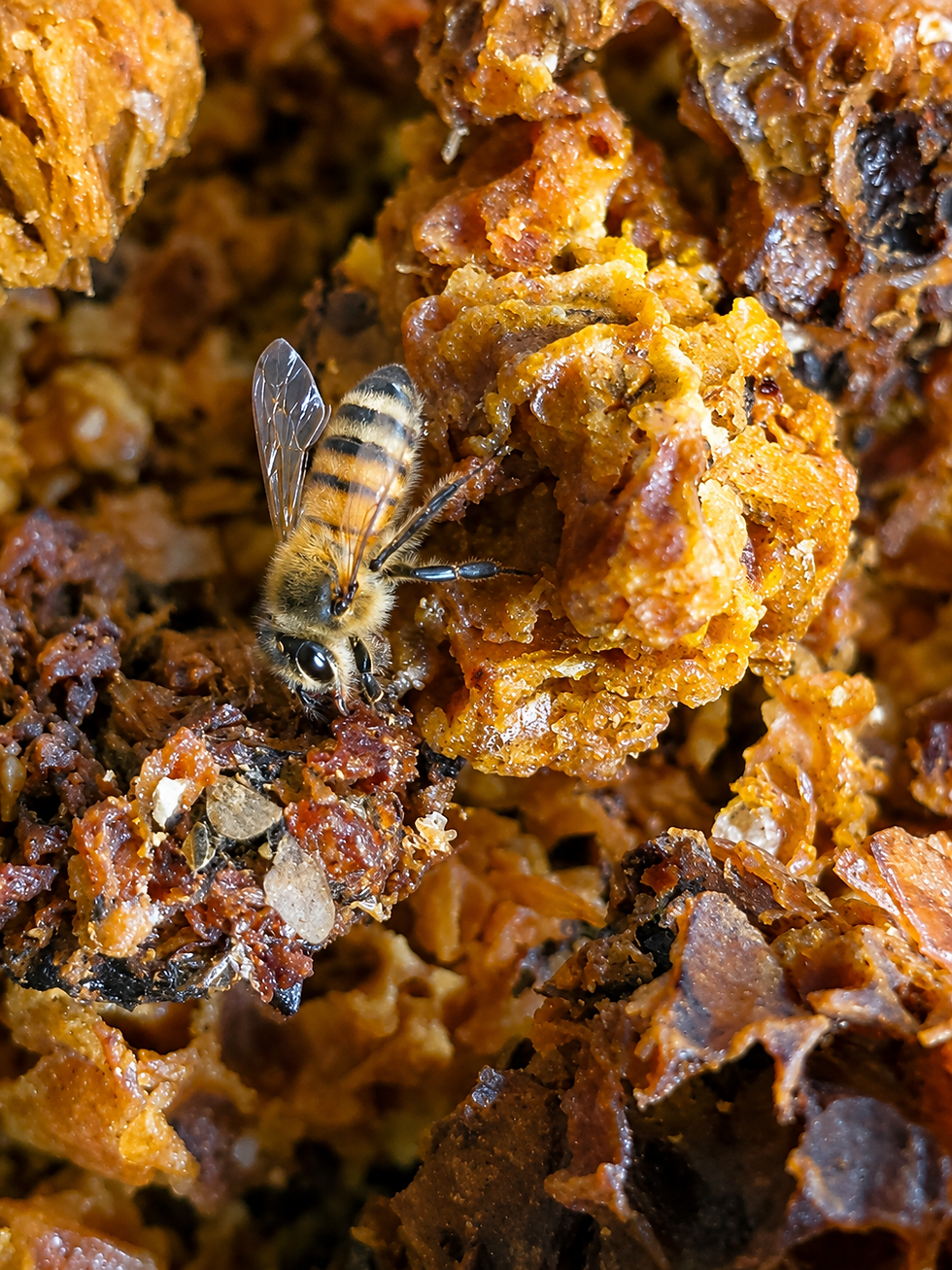
Propolis begins outside the hive.
Worker bees collect sticky resins from the buds, bark, and sap of certain trees and plants. They mix these plant resins with beeswax and enzymes produced by their own bodies before carrying the material back to the colony in their pollen baskets.
Inside the hive, bees use propolis to:
Seal small cracks and gaps.
Strengthen the hive structure.
Smooth rough interior surfaces.
Reduce drafts and unwanted openings.
Help maintain a clean, stable hive environment.
Because its composition depends on the local trees and plants, the color and aroma of propolis can vary from one region to another.
Beeswax: Nature's Perfect Building Material
Beeswax is produced by young worker bees.
Special wax glands located on the underside of their abdomen secrete tiny, clear wax scales. The bees remove these scales with their legs, chew them until they become soft and workable, and then shape them into the familiar hexagonal honeycomb.
Honeycomb serves many purposes within the hive, including:
Storing honey.
Storing pollen.
Raising developing brood.
Supporting the colony's overall structure.
The hexagonal design of honeycomb is remarkably efficient, allowing bees to build a strong structure while using relatively little wax.
Royal Jelly: Food for the Queen
Royal jelly is produced by young nurse bees.
Unlike honey or beeswax, royal jelly is not gathered from plants. Instead, it is a nutrient-rich secretion produced by glands located in the heads of nurse bees.
During the first few days of life, all honey bee larvae receive royal jelly.
However, larvae selected to become future queens continue receiving royal jelly throughout their development, while worker and drone larvae transition to a different diet.
This specialized nutrition plays an important role in the development of a queen bee, allowing her to become larger, fertile, and capable of laying thousands of eggs throughout her lifetime.
Three Different Products, Three Different Purposes
Although they all come from the same colony, each hive product serves a completely different role.
Hive Product | Primary Purpose |
Propolis | Seals and protects the hive. |
Beeswax | Builds honeycomb for storage and brood. |
Royal Jelly | Nourishes developing larvae and future queen bees. |
Together, these products help create the stable environment that allows a honey bee colony to function successfully.
An Incredible Example of Teamwork
No single bee could build or maintain a hive alone.
Thousands of worker bees cooperate continuously to collect plant resins, produce wax, care for developing brood, feed the queen, forage for nectar and pollen, and protect the colony.
Each bee performs specialized tasks depending on her age, creating one of nature's most organized and efficient communities.
Appreciating the Hive
The products we harvest from honey bees represent only a small portion of what they create for themselves.
Every drop of propolis, every sheet of beeswax, and every tiny amount of royal jelly exists because it serves an important purpose inside the colony.
By understanding how these remarkable substances are produced, we gain a deeper appreciation for the honey bee and the incredible natural processes taking place inside every healthy hive.
Our Commitment to Responsible Beekeeping
At Hi Vibe Honey Bees & Apothecary, we believe healthy bees come first.
Our colonies are managed with respect for their natural behaviors, and every hive product we offer begins with the work of healthy, thriving honey bees. We never heat our raw honey, and our bees are never fed sugar water during honey production. By caring for our colonies responsibly, we can share these remarkable gifts from the hive while always putting the well-being of the bees first.
Continue Learning
Interested in learning more about the amazing products created by honey bees?
Continue exploring these related articles:
Explore Our Bee Products
From raw honey to propolis, our handcrafted bee products are inspired by the incredible work of healthy honey bee colonies and our commitment to responsible beekeeping.
Explore Our Shop
Browse our collection of handcrafted products inspired by nature.


Comments