
Bee Pollen: What Is It and Where Does It Come From?

Bee pollen is one of the most well-known products associated with honey bees, yet it's often misunderstood.
Many people assume bee pollen is made by bees, but that's only part of the story. The pollen itself comes from flowering plants, while honey bees carefully gather, transport, and store it as an essential food source for the colony.
Without pollen, a honey bee colony could not raise healthy young bees or continue to grow.
What Is Bee Pollen?
Pollen is a fine powder produced by the male parts of flowering plants.
Its primary purpose is plant reproduction, but it also serves as one of the most important natural food sources for honey bees.
As bees visit flowers in search of nectar, tiny pollen grains cling to the fine hairs covering their bodies. The bees then use specialized brushes on their legs to gather the pollen into compact pellets, which they carry back to the hive in structures known as pollen baskets on their hind legs.
These colorful pellets are what most people recognize as bee pollen.
Why Do Honey Bees Collect Pollen?
Unlike nectar, which provides carbohydrates for energy, pollen is the colony's primary source of protein, fats, vitamins, and minerals.
Worker bees rely on pollen to feed developing larvae and young nurse bees.
Without an adequate supply of pollen, a colony cannot successfully raise the next generation of honey bees.
Where Does Bee Pollen Come From?
Honey bees collect pollen from thousands of different flowering plants.
The exact mix depends on:
The season.
Local wildflowers.
Trees.
Garden plants.
Agricultural crops.
Native flowering plants.
Because every landscape is different, the appearance of bee pollen changes throughout the year.
Some pollen pellets are bright yellow, while others may appear orange, red, green, gray, or even nearly black, depending on the plant species the bees visited.
How Is Bee Pollen Stored?
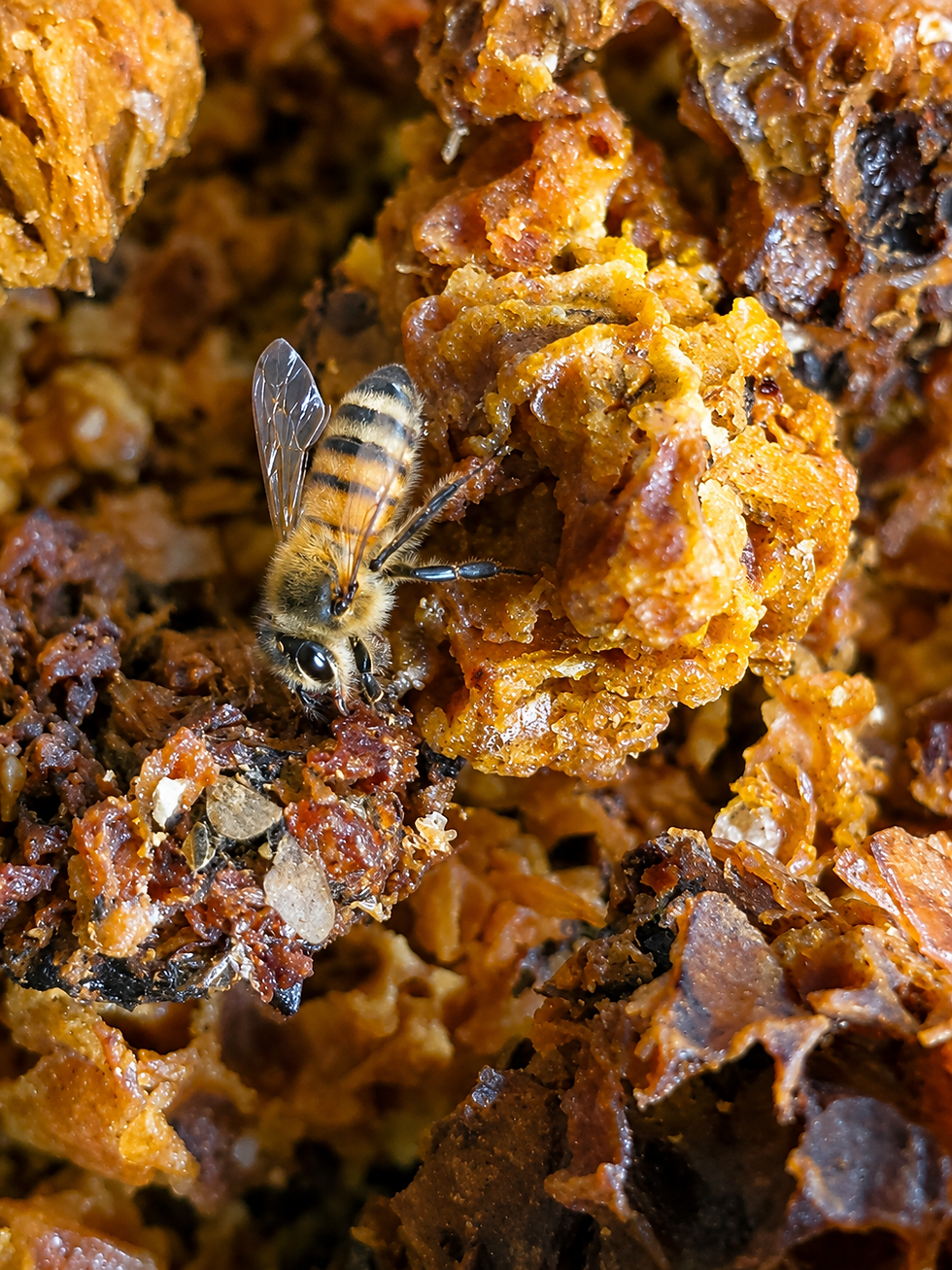
Once the pollen returns to the hive, worker bees pack it into honeycomb cells.
The pollen is mixed with small amounts of nectar and beneficial enzymes before being sealed beneath a thin layer of honey.
This process helps preserve the pollen, creating what beekeepers often refer to as "bee bread."
Bee bread serves as an important food reserve that nourishes the colony throughout the year.
Is Bee Pollen the Same as Bee Bread?
Not quite.
Bee pollen refers to the pollen pellets collected by foraging bees before they're stored.
Bee bread is the stored pollen after it has been packed into comb and naturally preserved inside the hive.
Although closely related, they represent different stages of the same process.
Why Is Bee Pollen Important for Pollination?
While collecting pollen for food, honey bees unintentionally transfer pollen between flowers.
This movement of pollen allows many flowering plants to produce seeds and fruit.
As a result, the simple act of collecting food for the colony also supports gardens, orchards, farms, and natural ecosystems through pollination.
Our Appreciation for Bee Pollen
At Hi Vibe Honey Bees & Apothecary, bee pollen reminds us that every trip a foraging bee takes serves multiple purposes.
As bees gather food for their colony, they also help pollinate countless flowers that support wildlife, food production, and healthy ecosystems.
It's another remarkable example of how honey bees contribute far more to the environment than simply producing honey.
Continue Learning
Interested in learning more about the incredible products of the hive? Continue exploring these related articles:
Explore Our Bee Products
Discover handcrafted products inspired by the incredible work of honey bees, including our raw honey and other hive-derived offerings.


Comments