
The Important Role of Fungi in Healthy Forest Ecosystems

When most people think about forests, they picture towering trees, wildflowers, birds, and wildlife. Yet beneath every healthy forest lies an incredible network working quietly behind the scenes—fungi.
Often overlooked, fungi are among the most important organisms in nature. They recycle nutrients, support plant growth, form partnerships with trees, and help maintain the balance of entire ecosystems. Without fungi, forests as we know them simply could not exist.
Nature's Master Recyclers
One of fungi's most important jobs is breaking down organic matter.
As trees, branches, and leaves fall to the forest floor, fungi gradually decompose this material, returning valuable nutrients back into the soil.
This natural recycling process provides future generations of plants with the nutrients they need to grow.
Without fungi, forests would become buried beneath layers of undecomposed wood and plant material.
Underground Partnerships With Trees
Many fungi form beneficial relationships with tree roots through structures known as mycorrhizae.
In these partnerships:
Trees provide fungi with sugars produced during photosynthesis.
Fungi help trees absorb water and nutrients from the soil.
Both organisms benefit from the relationship.
Scientists estimate that the majority of forest plants depend on these underground fungal partnerships to some degree.
Supporting Biodiversity
Healthy fungal communities support an incredible variety of life.
Fungi provide food and habitat for:
Insects
Small mammals
Birds
Amphibians
Countless microorganisms
As one species benefits, entire food webs become stronger.
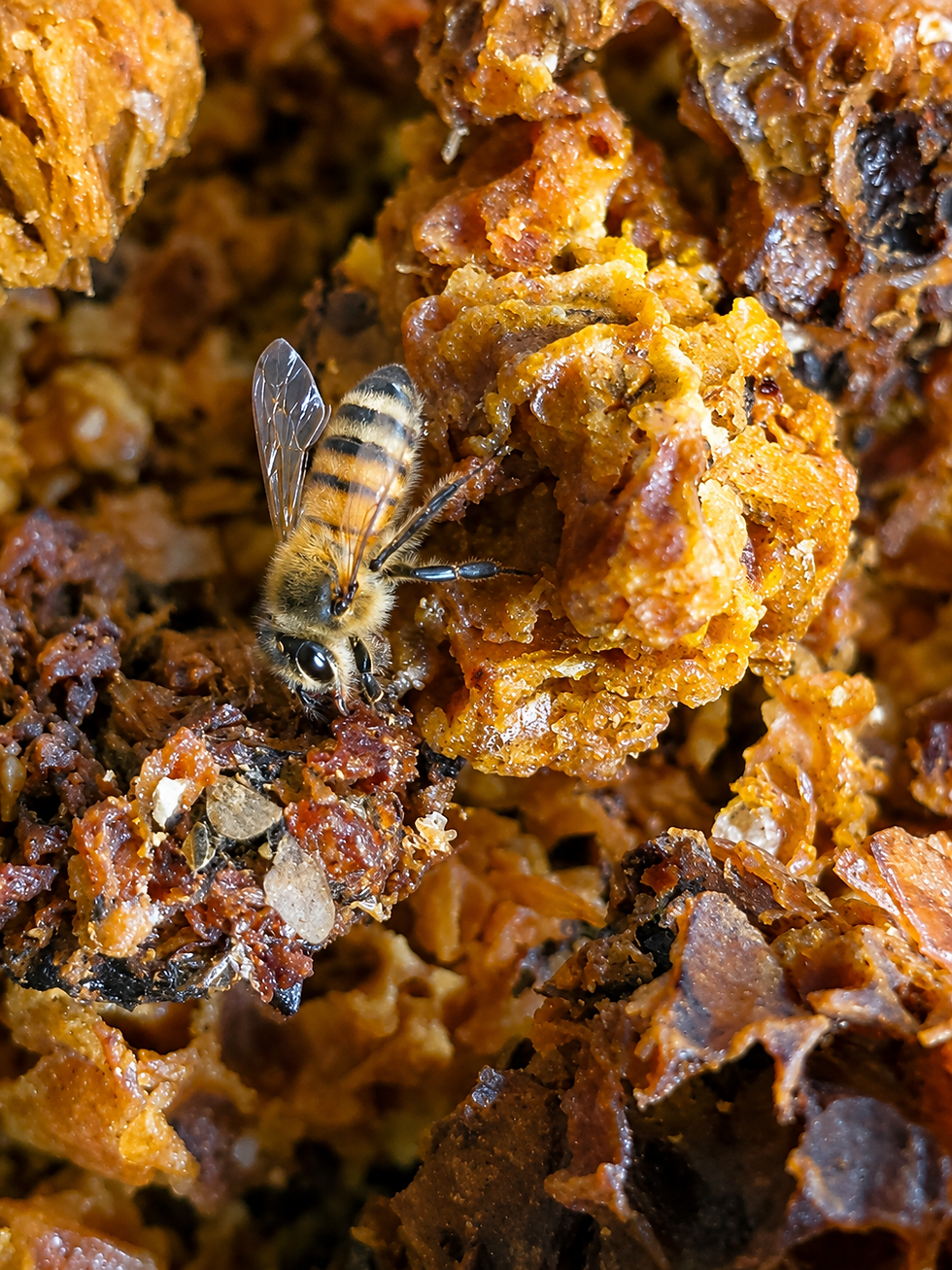
Interestingly, the connection between forests and fungi even extends to our buzzing pollinators. Honeybees have been observed actively foraging on mycelium, sipping the liquid drops they exude. Research shows that these fungal extracts contain powerful, natural immune-boosting compounds that help bees fight off viral infections and strengthen the hive. It is just another beautiful example of how the hidden world beneath our feet supports life far above it.
More Than Mushrooms
The mushrooms we see above ground are only a small part of the organism.
Most of the fungus exists underground as an extensive network of thread-like structures called mycelium.
This hidden network may spread for many feet—or even much farther—through soil, wood, and decaying plant material.
The visible mushroom is simply the reproductive structure that produces spores.
Nature's Nutrient Cycle
Fungi play an essential role in moving nutrients through the forest.
As organic material decomposes:
Carbon returns to the ecosystem.
Minerals become available to plants.
Soil structure improves.
New plant life becomes possible.
This continuous cycle helps forests remain healthy year after year.
Forest Health Depends on Fungi
Many of the mushrooms found in forests—including Dryad's Saddle, Turkey Tail, and countless other species—play important ecological roles.
Some decompose fallen hardwoods.
Others partner with living trees.
Some provide food for wildlife.
Together, they help maintain healthy, resilient ecosystems.
Why Responsible Foraging Matters
Because fungi play such important ecological roles, responsible mushroom foraging is essential.
Harvesting thoughtfully, respecting private property, and leaving enough mushrooms behind helps protect forests for future generations.
Sometimes the best choice is simply to observe, photograph, and appreciate a mushroom without disturbing it.
A Healthy Forest Begins Below the Surface
The next time you walk through the woods, remember that much of the forest's activity is happening where you can't see it.
Beneath every trail, fallen log, and towering tree lies an extraordinary network of fungi quietly supporting life above ground.
Understanding that hidden world reminds us that even the smallest organisms can play an enormous role in keeping nature healthy.
Our Appreciation for Forest Fungi
At Hi Vibe Honey Bees & Apothecary, we're continually inspired by the incredible diversity of fungi found throughout southern Indiana and the Hoosier National Forest.
Whether we're learning about edible mushrooms, traditional mushroom extracts, or the hidden world beneath our feet, we believe understanding fungi helps us better appreciate the interconnectedness of nature.
Healthy forests support healthy ecosystems, providing habitat not only for fungi but also for countless pollinators, birds, wildlife, and native plants. Protecting these natural spaces helps preserve the delicate balance that allows all of these species to thrive.
This same commitment to protecting natural ecosystems inspired the creation of the Indiana Pollinator Protection Coalition, which advocates for healthier environments where pollinators, native plants, and the landscapes they depend on can flourish.
Education, conservation, and responsible stewardship remain central to everything we do.
Continue Learning
Interested in learning more about mushrooms and forest ecosystems? Continue exploring these related articles:
Functional Mushrooms vs. Culinary Mushrooms: What's the Difference?
Responsible Mushroom Foraging: Safety and Ethical Harvesting
Turkey Tail: A Colorful Woodland Mushroom with a Rich History
How Mushroom Extracts Are Made: Understanding Dual Extraction
Indiana Pollinator Protection Coalition: Working Together to Protect Indiana's Pollinators


Comments